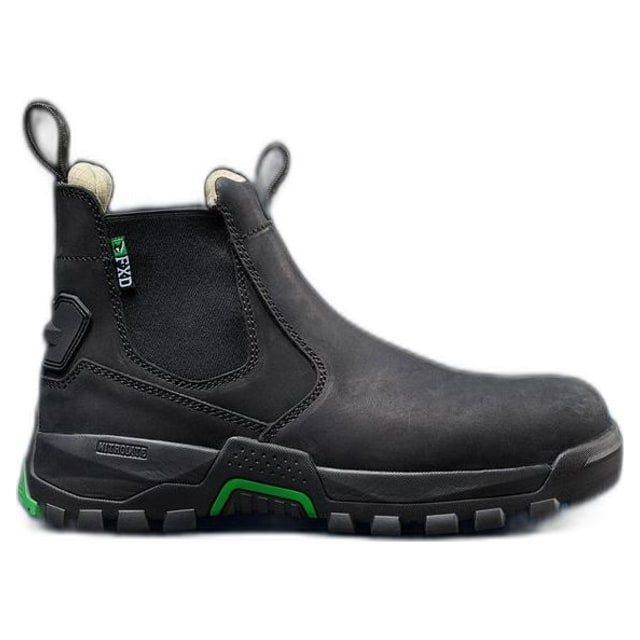
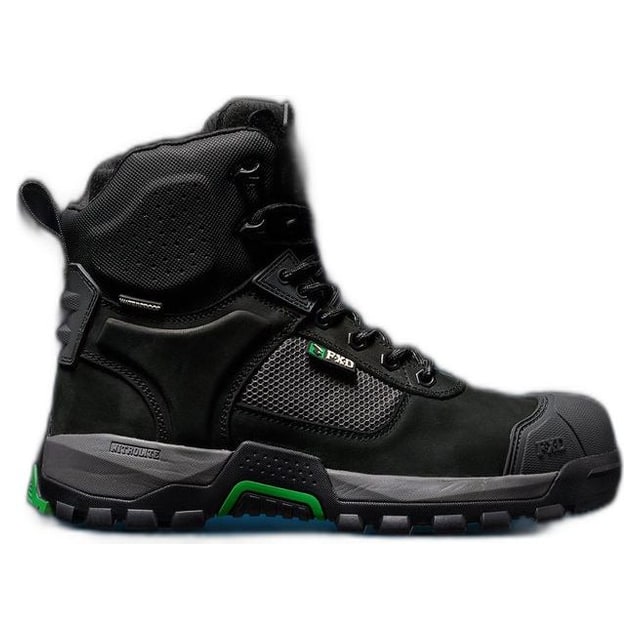
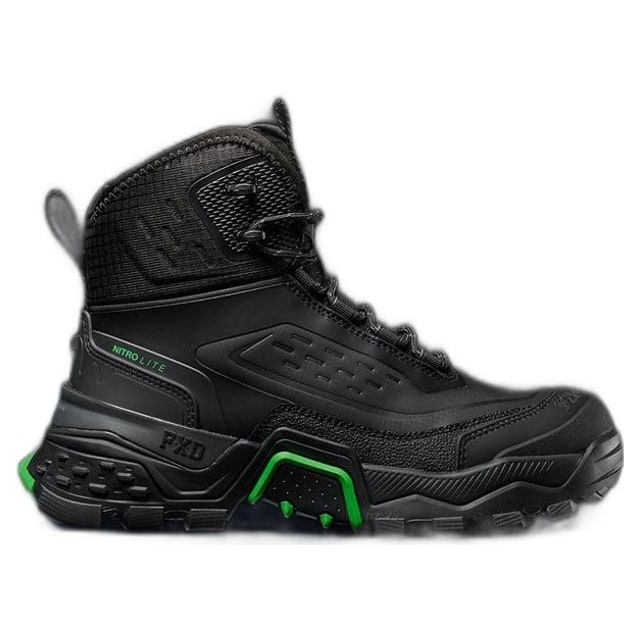
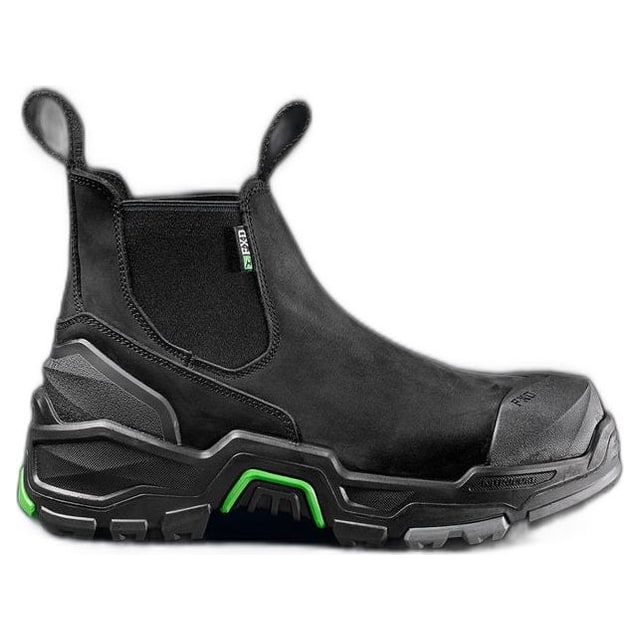
The temperature on a work boot listing is almost always a rating for the outsole. It tells you the hot-surface limit the maker states for the sole. It doesn't tell you how hot your feet will get. On the boots in our range, the number mostly follows the sole material: polyurethane (PU) and thermoplastic polyurethane (TPU) soles usually state 130°C or 140°C, while rubber soles, including nitrile rubber, usually state 300°C when they give a figure.
What the number on the label is describing
A heat-resistant sole is one the maker says shouldn't melt, crack or go soft on brief contact with a hot surface, up to the stated temperature. Whether that's enough for your hot surfaces, whether it's road work, plant decks or process areas, is for your site's PPE assessment to decide, not the label. The rating isn't about insulation, and it doesn't cover the leather upper, the stitching or the laces.
Under the Australian safety footwear standard (AS 2210.3, which is based on the international standard ISO 20345), a heat-resistant outsole can carry the marking HRO. HRO stands for heat-resistant outsole. Broadly, it means a test piece of the outsole has been held against a 300°C surface for about a minute and then checked for melting and cracking. It's a short lab test of the outsole, not a measure of whole-boot protection.
Why the sole material sets the number
Here's what the makers state on our product pages, quoted as written. The pattern is hard to miss.
| Boot | Outsole, as the maker describes it | Stated heat rating |
|---|---|---|
| Bata Zippy Mid Cut (804-88841) | PU | 130°C |
| King Gee Tradie (K27100) | TPU, with a PU midsole | 130°C |
| Steel Blue Argyle Zip Bump Cap (332152) | Antistatic TPU | 130°C |
| Blundstone 8553 Rotoflex | GRIPTEK HD TPU | 140°C |
| Steel Blue Argyle Zip Bump Cap Nitrile (342152) | Oil and acid resistant nitrile rubber | 300°C |
| Blundstone 9000 Rotoflex | GRIPTEK XHD rubber (PUR) | 300°C |
| Puma Sierra Nevada (630527) | Rubber | 300°C |
| King Gee Phoenix (K27880) | Rubber | "300 degree" |
| FXD DURA-X ONE | Rubber | 300°C |
| Oliver Lace Up Side Zip (55-352Z) | Dual density PU/rubber, rubber outsole | "300°C surface contact" |
| Syzmik UltraFort 6Z (ZFL601) | GripMax A/T | "300C Heat Rated Outsole (HRO)" |
The clearest example is the Steel Blue pair. The Argyle Zip Bump Cap comes as 332152 with a TPU sole stated at 130°C, and as 342152 with a nitrile rubber sole stated at 300°C. Apart from the outsole line, the two listings read the same, so the sole is what changes the number. If you like a particular boot, check which sole version you're looking at before you order.
A higher number isn't automatically the right choice. Makers pitch their TPU soles on other strengths, such as Steel Blue's "superior wear properties" and Blundstone's grip and stability, and plenty of tradies never stand on anything hotter than a summer footpath. The heat rating matters most when your work puts the sole on genuinely hot surfaces.
Reading the label: HRO, numbers, or neither
- A temperature in words. Most makers write it out, like Steel Blue's "Heat resistant to 300ºC" or Blundstone's "heat resistant to 140˚C". That's the maker's stated rating for that outsole.
- The HRO marking. Some listings show the full certification code instead. The Magnum Precision Max MPN150 lists "AS/NZS 2210.3:2019 SB AN WR E HRO SRA". There's no temperature in words there, but the HRO letters are the heat-resistant outsole marking. Syzmik writes "300C Heat Rated Outsole (HRO)".
- "Heat resistant" with no figure. The FXD WB-1 lists a "Slip, oil, and heat resistant" rubber outsole, and several Mongrel boots list a "Heat, oil & acid resistant" Vibram rubber outsole, without a temperature on our listing. If you need a number, check the maker's spec sheet before you buy.
None of the 130°C or 140°C listings we checked show an HRO marking. Treat those figures as the maker's own stated limit for that sole, and don't read them as an HRO rating.
What a sole rating doesn't cover
- How hot your feet get. Heat still travels up through the sole, midsole and footbed. A 300°C sole won't keep your feet cool on hot asphalt all day.
- The rest of the boot. Leather, stitching, laces, zips and pull tabs aren't part of the outsole rating.
- Molten metal, sparks and splash. Foundry work, welding and molten metal handling have their own protective equipment requirements. An outsole heat rating isn't a substitute for them.
A quick checklist for hot-surface work
- Start with your site's PPE rules. If your safety officer, employer or principal contractor specifies a sole rating or marking, that's your answer.
- Read the outsole line on the listing. It names the sole material and the stated temperature.
- If HRO is required, look for it in the certification code, not just the word "heat".
- Check the exact style code. As the Steel Blue pair shows, one boot style can come with different soles.
- Then sort out fit and other needs. Our guides to wide-fit work boots and metal-free and composite-toe boots cover those, and our work boot care guide covers cleaning and conditioning.
The boots in this guide
- Steel Blue Argyle Zip Bump Cap Safety Boot 332152 and Argyle Zip Bump Cap Nitrile Safety Boot 342152
- King Gee Tradie Work Boots Wheat K27100 and King Gee Phoenix Safety Work Boots K27880
- Blundstone 8553 Unisex Rotoflex Safety Boot and Blundstone 9000 Unisex Rotoflex Steel Toe Elastic Side Safety Boot
- Puma Sierra Nevada Lace Up Waterproof Safety Boot Black 630527
- FXD DURA-X ONE High Cut Nitrocore Work Boot
- MAGNUM Precision Max Waterproof Safety Boot MPN150
- Syzmik UltraFort 6Z Side Zip Safety Boot ZFL601
- Browse all safety boots.
Fitting out a road crew or a maintenance team? Send us an enquiry and we'll help you put boots and branded workwear together in one order.