
If your logo is going on polos, shirts, jackets or caps that will be worn and washed every week, embroidery is usually the safer choice. Printing makes more sense when the design is large, full-colour or photographic, or when you need names and numbers. Plenty of uniforms use both: a stitched logo on the chest and a print on the back.
The rest of this guide explains how we make that call on our own production floor, where our team does the embroidery and printing in-house.
Start with the garment, not the logo
The fabric often decides for you.
- Heavy cotton drill, cotton twill and fleece take embroidery beautifully. The fabric is stable enough to hold thousands of stitches without puckering.
- Polo shirts and business shirts suit a small embroidered logo on the left chest. It's the classic uniform look, for good reason.
- Lightweight polyester and performance fabrics need more care. A dense stitched logo can pull a thin fabric out of shape, and some transfers need heat that these fabrics don't tolerate well. On garments like 100 GSM ripstop shirts, talk to us before choosing a method. We'll recommend what suits that particular fabric.
- White or light-coloured polyester opens up dye sublimation, where the colour goes into the fabric itself.
- Hi-vis needs extra thought. Keep logos clear of the reflective tape and check any site rules with your safety officer or principal contractor before you order.
What each method is good at
We offer five decoration methods. Here's where each earns its place.
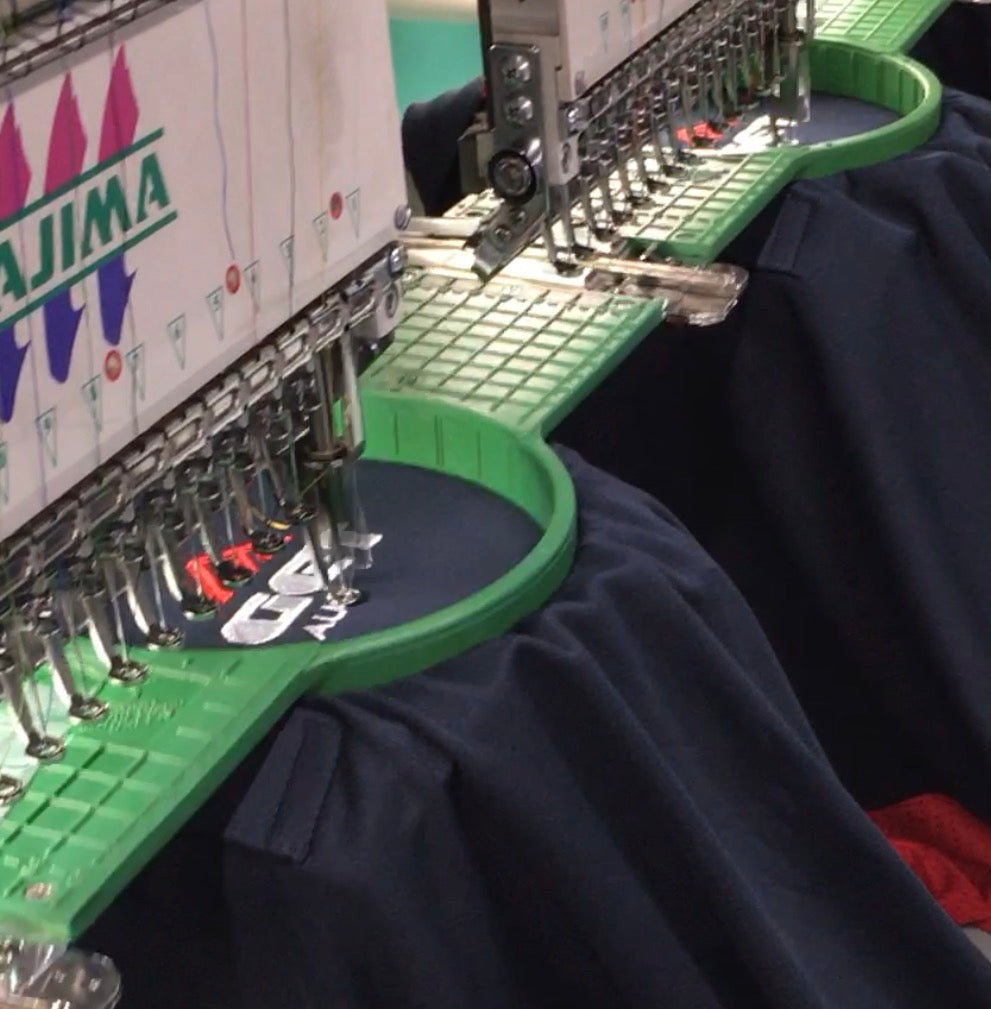
Embroidery. Your logo is digitised (converted into a stitch file) and sewn into the garment with industrial multi-head machines. It's hard-wearing, it keeps its colour through many washes, and it looks professional on a polo, jacket or cap. Fine detail and tiny lettering are its weak spot. Very small text can close up, so a simplified version of your logo sometimes stitches better than the original.
DTF (direct to film). The design is printed with pigment ink onto a transfer film, then heat pressed onto the garment. It's ideal for vivid colours and crisp lines, and feels noticeably smoother on the garment than a digital print transfer. It suits detailed or colourful logos and large back prints.
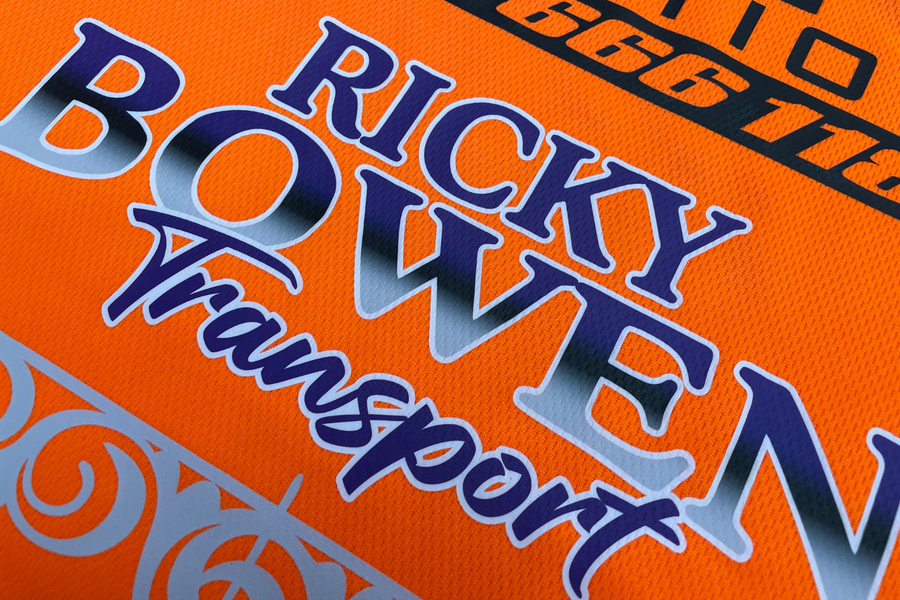
Digital print and cut vinyl. Cut vinyl is ideal for names and numbers. Digital print transfers suit bright, photo-style images. Both are heat applied, so the same garment cautions apply.
Screen printing. Ink is pushed through a stencil, with one screen per colour. It's durable and cost-effective when you're printing the same design in the same size on a larger run. We need a minimum of 25 units with the same print size. Logos with many colours may be better suited to another method.
Dye sublimation. The design is dyed into the fabric, so there's nothing to crack or peel. It only works on polyester-based fabrics that are white or light in colour.
A quick way to decide
| If your situation is… | We'd usually suggest… |
|---|---|
| A small logo on polos, shirts, jackets or caps worn daily | Embroidery |
| A large back print with your business name and phone number | DTF or screen printing |
| Full-colour artwork or a photo | DTF or digital print |
| Fewer than 25 garments with a printed design | DTF or digital print, rather than screen printing |
| 25+ garments with the same print, one or two colours | Screen printing is worth comparing |
| Names or numbers on each garment | Cut vinyl |
| White or light polyester sportswear | Dye sublimation |
| Lightweight polyester or hi-vis | Talk to us first. It depends on the fabric |
Does embroidery last longer than printing?
On the right garment, generally yes. Thread doesn't crack or peel, and embroidery thread keeps its colour very well through many washes. A quality print lasts well too if it's cared for properly: wash inside out in cold water, skip the dryer, and don't iron over the print. Our care guide for decorated garments covers the details.
What affects the cost?
We quote every decoration job individually, because the price depends on the job itself. The main factors are:
- Size and stitch count. A bigger or denser logo takes longer to stitch.
- Number of positions. A chest logo plus a back print is two jobs.
- Number of colours. This matters most for screen printing, where every colour needs its own screen.
- Quantity. Setup work is shared across more garments on a larger order.
- New or existing logo. A logo we already hold production-ready skips the setup step.
- The garment itself. Some fabrics need extra backing or a different approach.
The quickest way to a real number is to send us your logo and tell us the garments and quantities you have in mind.
Can I mix methods on one uniform?
Yes, and it's common. A typical tradie setup is an embroidered logo on the chest of a work shirt plus a large printed back so the business name can be read across a site. A café might embroider aprons and print staff tees. Matching the method to each garment usually gives the best result.
Your next step
Send us your logo and garment list and we'll recommend the method that suits each item. For a new embroidered logo, we confirm the artwork with you before anything is stitched. You can also read more about each method on our Decoration Services page, or call the team on (02) 4577 5901.